HAZECO Load Shedding Schedule – Check Live Feeder Status
| Feeder | Status | Hours | Schedule |
|---|
Electricity consumers in the Hazara region often search for the HAZECO load shedding schedule to know when power outages will occur in their area. The live tool above allows users to check feeder-wise electricity status in real time, including whether a feeder is currently ON or OFF, when the next outage is expected, and how long the interruption may last. This helps residents quickly understand the current electricity supply situation without waiting for official announcements.
Live HAZECO Feeder Status and Outage Information
The load shedding checker on this page provides live feeder data for the Hazara Electric Supply Company network. Users can search their feeder name and instantly view the current power status, next scheduled outage in hours and minutes, and planned load shedding time window. The tool also shows overall statistics such as total feeders in the system, feeders currently ON, and feeders experiencing load shedding, giving consumers a clear snapshot of electricity supply conditions.
How to Find Your HAZECO Feeder Name
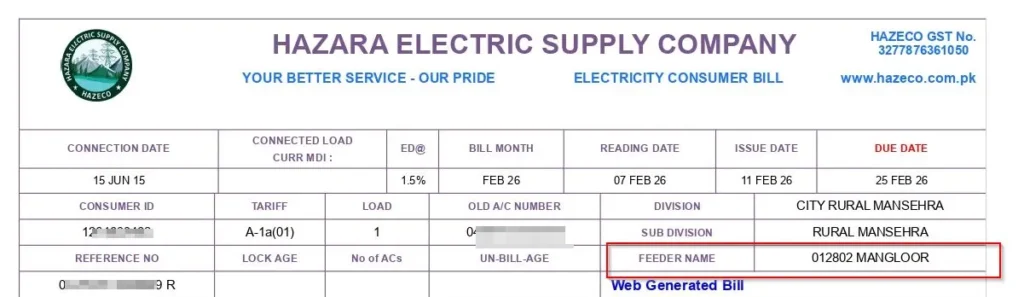
If you are unsure about your feeder name, it can usually be found on your electricity bill issued by HAZECO. The feeder name or grid station information is typically printed near the consumer details or billing section. Once you identify your feeder, you can simply search it in the tool above to check the latest load shedding status and upcoming outage schedule.
Search Your Feeder to Check Power Status
Consumers can easily check their electricity supply by typing the feeder name in the search box above. The system instantly displays the feeder record with information such as current status (ON or OFF) and the next expected load shedding interval. For example, if a feeder is scheduled for an outage in 9 hours and 42 minutes, the tool calculates and displays that information automatically, helping users plan their activities more efficiently.
Filter Feeders by ON or OFF Status
The feeder monitoring system also includes filtering options so users can quickly view all feeders, only ON feeders, or only OFF feeders. This feature is particularly helpful during widespread outages because it allows consumers to instantly see which feeders are currently without electricity. Such feeder-wise filtering provides better visibility into the power distribution network and helps identify outage patterns across the HAZECO service area.
Example HAZECO Feeders in the Network
HAZECO operates hundreds of feeders connected to multiple grid stations in the Hazara region. Examples of feeders include Sherwan Feeder, Mandian Feeder, Jhangi Feeder, Havelian Feeder, and Khalabat Feeder. Each feeder supplies electricity to specific neighborhoods and localities, which is why power interruptions often vary from one feeder to another even within the same city.
What Causes Load Shedding in HAZECO Areas
Load shedding in the HAZECO distribution network can occur due to several operational and technical factors. These include high electricity demand, transmission constraints, feeder overload, scheduled maintenance, and grid stability requirements. In addition to these factors, electricity utilities across Pakistan also face challenges such as line losses and electricity theft, which affect the financial and operational efficiency of feeders and can influence the duration of load shedding.
Electricity Losses and Recovery Rates
Electricity distribution companies monitor technical losses, commercial losses, and bill recovery rates for each feeder. Feeders with higher losses or lower bill recovery sometimes experience longer load shedding durations as part of distribution management policies. Reducing electricity theft and improving bill recovery helps utilities maintain stable electricity supply and reduce unnecessary outages.
How Many Feeders Are in the HAZECO System
The Hazara Electric Supply Company currently manages 237 distribution feeders connected to multiple grid stations across the Hazara Division. At any given time, some feeders remain fully operational while others may experience scheduled or unscheduled outages. The statistics displayed in the tool above provide an overview of total feeders, feeders currently supplying electricity, and feeders affected by load shedding.
Preparing for Power Outages
During load shedding periods, keeping essential backup items at home can help minimize inconvenience. Many households use emergency lights, rechargeable torches, power banks for mobile phones, UPS systems, or small backup batteries to maintain basic lighting and communication during outages. Keeping these items charged in advance helps households manage temporary electricity interruptions more comfortably.
Why Feeder-Based Information Matters
Feeder-wise electricity information is important because power outages often occur at the feeder level rather than city-wide. This means one feeder such as Sherwan Feeder may experience an outage while another nearby feeder continues to receive electricity. Checking feeder-level data provides more accurate information compared to general area-based load shedding announcements.
Check HAZECO Load Shedding Today
To find out whether electricity is currently available in your locality, simply search your feeder using the HAZECO feeder status tool above. The system will instantly display the current ON/OFF status, next scheduled outage timing, and feeder load shedding information. By checking this data regularly, consumers can stay informed about real-time electricity supply conditions in the Hazara region.